
Jon Redmond Workshop - Landscape from Photo - Feb 27 & 28
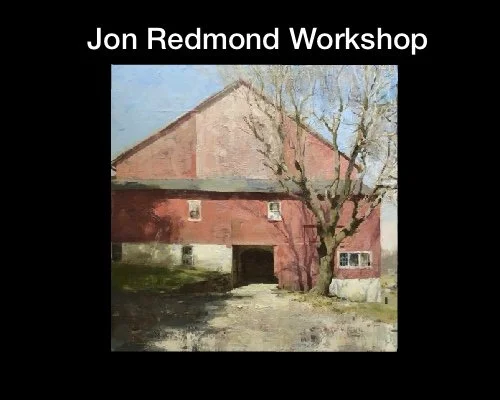
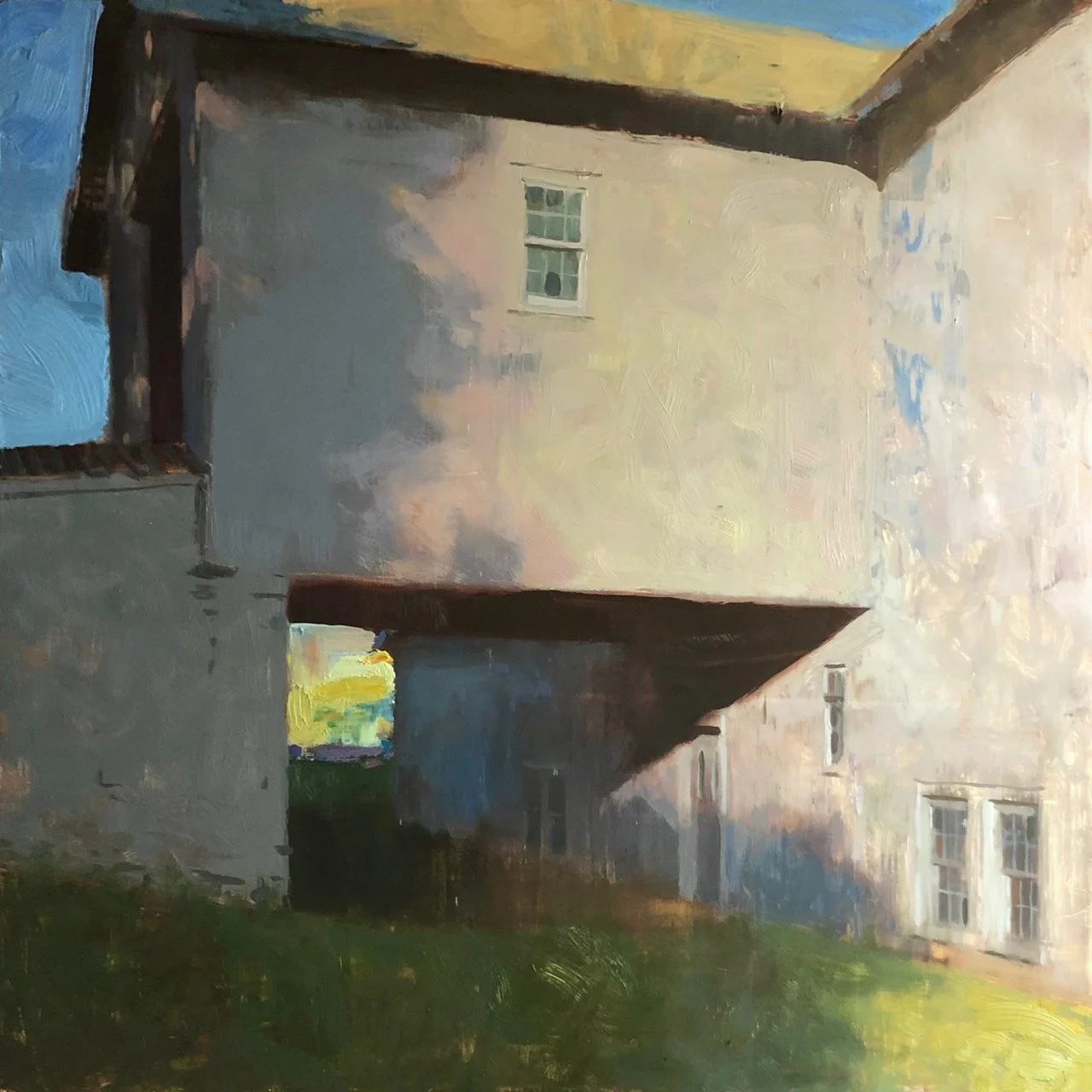
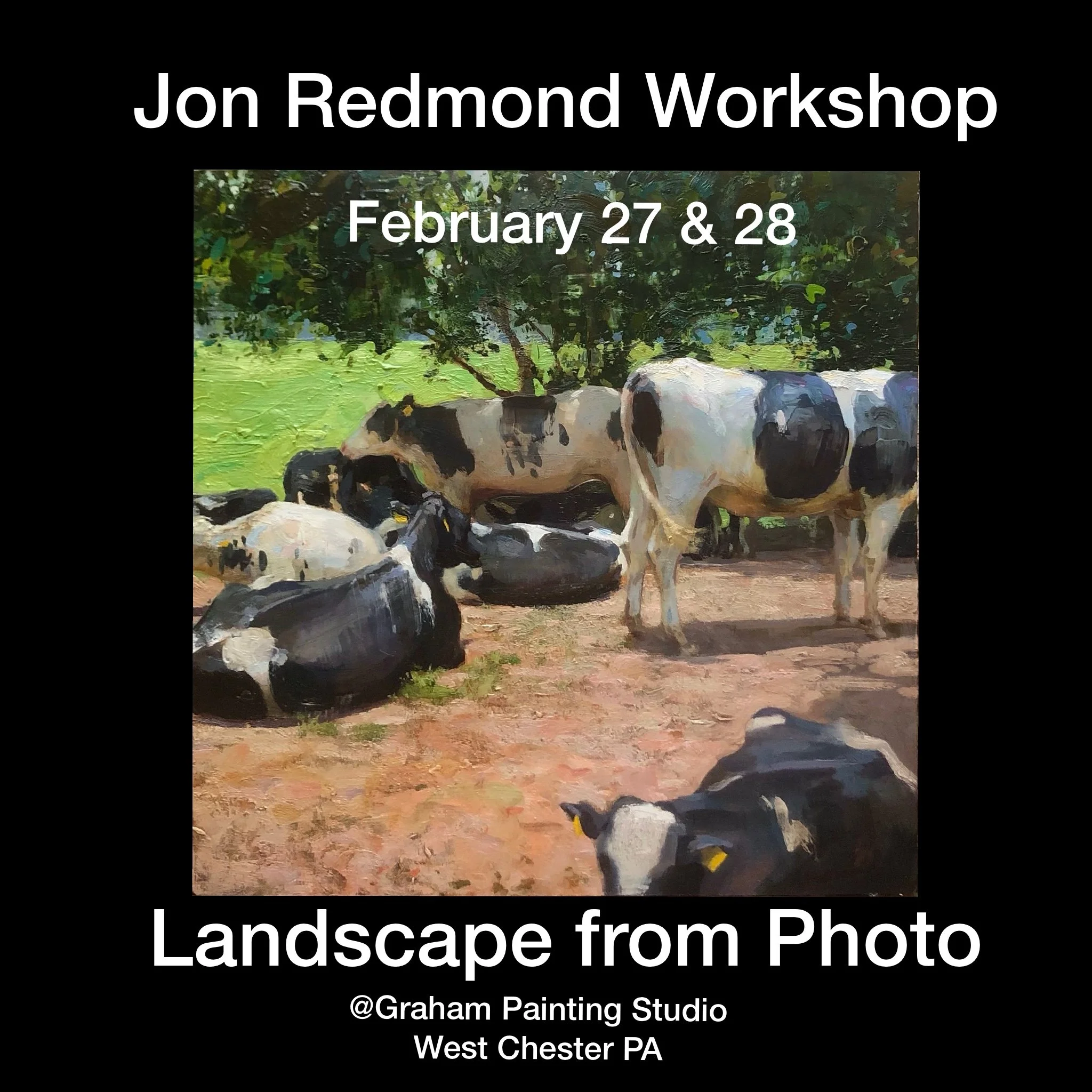
Jon Redmond Workshop - Landscape from Photo - Feb 27 & 28
Painting Landscapes from Photo - Instructor Jon Redmond
Saturday February 27 and Sunday February 28 from 10am - 3pm
At Graham Painting Studio - 25 N Walnut St West Chester PA
Graham Painting Studio is thrilled to have the masterful artist Jon Redmond teach two day workshop in his hometown of West Chester. Don’t hesitate to take advantage of this opportunity to absorb Jon’s artistic wisdom and improve your own artistic skills.
Workshop Description
This workshop will help you navigate through the difficulties and pitfalls of painting landscape in the studio utilizing photographs.
Often we think that a photo reference will aid our paintings but end up with uninspiring and flat looking work.
Through demonstrations and individual instruction I will show various ways to bring life, energy and diversity into the studio process, helping you utilize your pigments, materials and technique to enrich your landscapes.
Examples of some of the topics I will cover are: photo selection and editing, pigment selection and use, underpainting process, mark making diversity, medium selection and use, value and color temperature control, color mixing, atmospheric perspective, direct vs indirect painting methods.
Please bring a good selection of 10 or more of your own personal landscape photographs (on a laptop computer or printed 8x11 or larger). Please no working from Ai photos or other artists/photographers images. Please bring your laptop, charger and perhaps an extension cord if you want to work from digital images. No working from phones!
I suggest a smallish (no larger than 20 inches) canvas or panel to work on, something that you can make progress on in the allotted class time. Please read my material suggestions for what you might want to bring to class.
Location, Logistics & Policies
The workshop will be held at Graham Painting Studio from 10am - 3pm both Saturday March 21st & Sunday March 22nd. Graham Painting Studio is located in the heart of West Chester Pa. The address is 25 N Walnut St West Chester. The studio is located on the second floor and there is no handicap access. Students will need to pay for parking in West Chester. There are plenty of places within a short walk to the studio. More details will be provided upon registration.
Cancellation Policy: If you have already registered for one of our workshops, and you are no longer able to attend, our cancellation policy is as follows:
Full refund minus a $50 admin fee up to 21 days out of your scheduled training
50% refund after that up to two weeks out from the scheduled date
No refund within 72 hours of workshop
Please email Randall with any questions.
Please Note that there will be a lunch break. Students can bring their own food and eat in the studio. Or there are plenty of places to eat with in walking distance to the studio.
_________________________________________________________
Suggested materials list for indoor workshops
For informational purposes these are the materials I use. I have listed a few brands and options for each color on my palette. I have put a (*) next to my personal favorite. You are welcome to use whatever colors or materials or medium that you want in class. Don’t feel that you have to buy new pigments or materials just for this class. Most folks already have pigments that are close substitutes to what I recommend but if you are interested in trying my specific palette you might want to buy a few new colors.
If you only want to try one new thing, I would highly recommend getting a transparent earth yellow pigment if you have never used it. It is very different from yellow ocher. Give it a try.
Gamblin is a readily available, all around good brand. If you want to make it super easy to find my palette just select the colors from Gamblin brand paints which are available at most good art supply stores.
Pick ONE tube of paint from each color group for a total of 10 colors on your palette
(Opaque yellow cold)
Any brand cadmium yellow light or cheaper cadmium substitute pigment usually called “Permanent” yellow with a cool, light “lemony” tone. Just remember, the more expensive the paint the higher quality pigment and oils used.
(Opaque Yellow warm)
(Blick Artist) cadmium yellow medium
(Grumbacher) cadmium/Barium yellow Mdm
(Tusk and pine) cadmium yellow deep
(Gamblin) cadmium yellow medium (or deep if you want a darker rich yellow)
(*Rembrandt) cadmium yellow deep !!
(Opaque Red)
(Grumbacher) cadmium barium red light
(Grumbacher) grumbacher red
(Winsor Newton) Windsor red
(*Rembrandt) cadmium red light (the best cad red I’ve used!!)
I look for a bright orangey cad red as opposed to something cooler.
(Transparent earth yellow)
This is my favorite pigment
All of these brands are nice.
(Tusk and pine) Transparent yellow oxide
(Gamblin) transparent earth yellow
(*Rembrandt) transparent oxide yellow
(Grumbacher) transparent yellow oxide
(Transparent earth red)
(Tusk and pine) transparent red oxide
(Gamblin) transparent earth red
(*Rembrandt) transparent oxide red
(Grumbacher) transparent red oxide
(Transparent earth green)
Any brand of Sap Green
I prefer (*Grumbacher). Look for the darkest sap green you can find.
(Transparent Blue)
Any brand of Ultramarine Blue.
Again look for the darkest you can find. Deep ultramarine usually has a darker tone
(*Gamblin) and (Old Holland) are nice, (Tusk and Pine) looks good too.
(Cool Transparent Red)
Any brand of Alizarin Crimson
I like (*Winsor Newton).
Look for a nice dark one. If you really care about color permanence you can choose an alizarin substitute pigment. But I like to live on the edge.
(Cool Transparent Green)
Phthalo Green (any brand)
(Windsor Newton) Windsor green
Viridian green (if you can't find phthalo)
Again look for the darkest.
If you have used any of these in the past and hate the intensity
Look for a less chromatic cool green for your pallet but I think Phthalo is the king. (*Gamblin) is my go to.
(White) large tube
Any brand or type of white you wish
I use (*Gamblin) Flake White replacement
Zinc is cooler and more transparent, Titanium and lead are more opaque. Titanium is the brightest.
Lead or Flake is the thickest.
Try them all at some point in your life.
(Medium)
I use Original Liquin. I like its consistency and drying rate. For outdoor landscape painting I put mine into new empty paint tubes for convenience.
Feel free to use any medium you prefer, there are lots to choose from. It’s good to experiment occasionally but always have your favorite as backup.
(Thinner)
I recommend cheap odorless mineral spirits from the hardware store. I put enough for a days panting in a little Nalgene container.
Please no glass containers in the studio. The small snap down lidded metal brush wash containers sold at Blick are nice for studio and workshop use. Real turpentine (especially used turp) can be extremely smelly and noxious. Please try to use odorless thinner when working in a shared studio space!
(Brushes)
I use filbert style hog hair brushes in sizes ranging from a 1/4 inch to about an inch or larger when doing small 10"x10"ish paintings. (The bigger the painting the bigger the brush) a tiny detail brush can also be useful but
I will be encouraging you to use bigger brushes so don't just bring a truck load of tiny little brushes. I like Blick's Masterstroke series but usually buy what is on sale. You don't really need more than 5 brushes. There is no need to carry 87 crusty old worn to the nub brushes with you every time you go out to paint. You also might like to try out a few softer brushes like sables or synthetic. A palette knife is handy and I also like to have tools to manipulate the paint on the painting. I usually have a soft watercolor mop brush and also use a small rubber scraper thingy (which I will discuss) There are lots of contemporary non brush tools available these days. Live dangerously and try something new.
Rags or paper towels
(Support)
I like to paint on 1/4 inch thick birch Plywood that I buy at the lumber yard and cut myself.
I usually ground it with 3 or 4 coats of acrylic gesso.
I also sometimes paint on Mylar (Dura-Lar) Taping it to a piece of foam core. Pads of painting canvas/paper are great for experimenting and class work. I recommend Fredrix brand canvas pads. Other brands can be overly absorbent.
Real linen, either mounted on panels, stretched or in pad form is also a nice painting surface.
I recommend you bring a few of whatever surface or surfaces that you wish to paint on. It’s good to have options. The only surface I do not recommend is the cheap cotton canvas-boards or really any cotton canvas in general. They always produce truly awful paintings.